Concrete pumping is a cost-effective and efficient way of delivering concrete to the desired location. Whether you’re a contractor, builder, or homeowner, it’s important to consider the type and size of the pump, pumping distance and height, project requirements, and cost and budget.
Choosing the right concrete pumping solution is essential for the success of any construction project in and around Hampshire. Here are four of the most critical considerations to keep in mind when selecting a concrete pump:
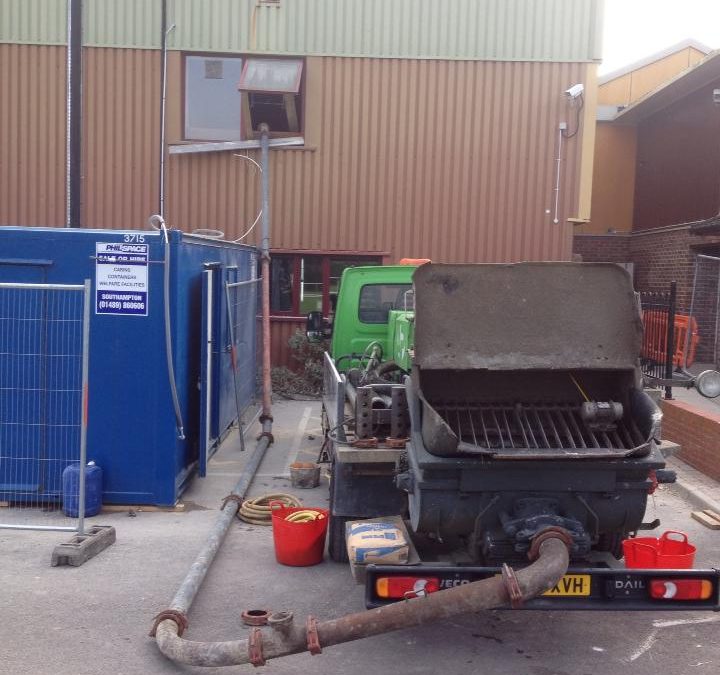
- Pump Type and Size: The first thing you need to consider is the type and size of the pump. There are two main types of concrete pumps: stationary and portable. Stationary pumps are permanently mounted on a truck or trailer and are ideal for large commercial construction projects. Portable pumps, on the other hand, are mounted on a wheeled chassis and are suitable for smaller projects, such as residential concrete foundations. In terms of size, concrete pumps come in a range of output capacities, so it’s important to choose a pump that’s appropriately sized for your project.
- Pumping Distance and Height: The distance and height at which concrete needs to be pumped will also play a crucial role in choosing the right pump. Some pumps have a limited pumping distance, while others can pump concrete up to several hundred feet. You also need to consider the height at which the concrete needs to be delivered. Some pumps can pump concrete to great heights, while others are limited to lower elevations.
- Project Requirements: It’s also important to consider the specific requirements of your project when choosing a concrete pumping solution. For example, if you’re working on a tight construction site, you’ll want to choose a pump that’s compact and manoeuvrable. If you’re pumping concrete for a multi-story building, you’ll need a pump that can handle the pressure and has a high output capacity.
- Cost and Budget: Finally, the cost is always a consideration when choosing a concrete pumping solution. Portable pumps are generally less expensive than stationary pumps, but they may not be the best choice for larger projects. When choosing a concrete pump, it’s important to consider the cost of the pump, as well as the cost of any additional equipment and accessories you’ll need, such as hoses, clamps, and couplings.
Considering these four key factors, you can ensure that you choose a concrete pump that’s well-suited for your project and will help you get the job done right. You can get in touch with Arun Pumpcrete to obtain relevant information about our concrete pumping solutions in and around Hampshire.
Recent Comments